
Title: I Am Ready To Act
Speaker: Nate Holdridge
Text: Micah 1
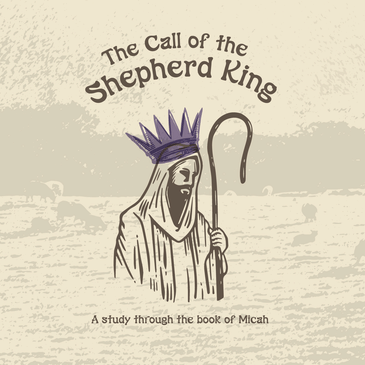
Micah Theme: Throughout his prophecies, we will encounter a figure who is both king and shepherd, who will lead God's remnant flock.
Overview: Our study of Micah is titled "The Call of the Shepherd-King." Today, we look at Micah 1, the oracle's historical context, its call for repentance, and the vivid imagery used by Micah to convey God's lamentation over his people's sins. Through a deep exploration of Micah's vision of a world centered around Yahweh's righteousness, the sermon challenges us to reflect on our own lives, urging us towards actions that align with God's kingdom values. This episode is a compelling invitation to understand and embrace the transformative power of God's word through Micah, encouraging listeners to live out their faith with justice, kindness, and humility.
[00:00:00] Thank you for listening to the Calvary Monterey Podcast. Please visit calvary.com to learn
[00:00:10] more about our church and visit NateHoldrich.com for additional Bible teaching from our lead pastor,
[00:00:16] Nate Holdrich. Teaching today is our lead pastor, Nate Holdrich.
[00:00:24] All right, good morning church. Let's take out our Bibles today and turn to the book of Micah. I'll give you a minute
[00:00:31] to find that one. It's a little tough. We're starting a new book of the Bible today and we're going
[00:00:41] to be in Micah chapter 1 looking at the whole chapter this morning if you guys would turn there.
[00:00:46] And yeah, looking forward to Easter. It's going to be a wonderful time. We're going to have a great
[00:00:51] time at the Good Friday service people have already been asking me, are we going to do what we normally
[00:00:54] do? We're going to tell the story of Jesus's death and the passion week and all of that. And yeah,
[00:00:59] that's exactly what we're going to do. That's a story we want to revisit each year. And so we're
[00:01:04] going to think about that this good Friday and then think about the resurrection on Sunday morning.
[00:01:10] At the second service I'm going to be praying for a new missionary that we're sending out here
[00:01:16] at the church just for four or five months. Her name is Lily Powers. She's I think 18 years old,
[00:01:23] maybe 19 years old and I'm beginning that wrong but she's going to Thailand to join Pastor Josh who
[00:01:28] we sent there at the beginning of the year with his family to be one of the first student interns
[00:01:33] that they have. So we're going to lay hands on her and pray for her at the second service but
[00:01:37] I don't want you guys to miss out on that and I thought we could pray for her together in this service
[00:01:41] as well before we get into the word. So you guys there, you guys have Mike out one, you found it already?
[00:01:47] You guys are so quick, you know the Bible. You know the minor prophets already. You already know
[00:01:52] what Mike is about. I don't even need to teach it to you. All right, let's pray together. Lord,
[00:01:57] we thank you for your word. We pray that you would speak to us today from it and Lord,
[00:02:03] we want to lift up Lily to you. Thank you, Lord, for this second generation missionary who is answering
[00:02:10] the call from you. We don't know what this is going to lead to in her future but Lord, we're excited
[00:02:17] for her and so we pray that you fill her with your spirit that you provide for her every need
[00:02:22] that you help her Lord with every ounce and moment of culture shock and homesickness and all of
[00:02:28] that. We pray, Lord, on this huge adventure that she's going on that she would get to experience
[00:02:33] the spirit of the living God working and moving in her life. And so Lord, we pray for her.
[00:02:41] Lord, we now commit our time in the book of Micah into your hands and we ask Lord that you
[00:02:47] would speak to us from it. We thank you Lord and praise you in Jesus name. Amen. Amen.
[00:02:53] Well, we live in an age where many voices contend for our allegiance.
[00:03:05] Ever competing perspectives bang around the cosmos, contradicting and challenging
[00:03:11] the voices that came before them. We're constantly told in our modern time how to think and
[00:03:19] how to live. It seems as if everyone has a vision of what it would look like if all was right in
[00:03:28] the world. One man's numerality is another's abomination. One man's moral majority is another's
[00:03:40] patience to let that majority fade away and die off. The right side of history for one is
[00:03:48] recency bias and chronological snobbery for another. The quest to legislate morality for one is
[00:03:56] a quest to harm humanity to another. People cannot agree on a shared vision for justice,
[00:04:04] equality, or the compassionate treatment of others. We cannot agree on a definition for love
[00:04:10] or hate or judgment or justice or tolerance or a myriad of other hot button words.
[00:04:17] People used to talk about making the world a better place and now we have no idea what that even
[00:04:24] means. Against all these perspectives, the prophet Micah enters the scene. He also has a vision
[00:04:35] of the good life and a good world. He spelled it out in three winding oracles found in his book
[00:04:43] that all began with the word here, an invitation to hear. Listen to the things I am about to say,
[00:04:52] Micah is saying to us. His vision as found in this book is of a beautiful life.
[00:05:00] Lead and centered upon Yahweh and Yahweh's mountain where all people flow to God to hear his
[00:05:08] law and to live in subservience to it. This revival atmosphere that Micah envisions is one that will
[00:05:17] lead to times of unparalleled peace and prosperity because Yahweh will in that day be king.
[00:05:25] It's a world according to Micah where God's people finally live in accord with God's righteousness.
[00:05:34] The perfect meld of worship and witness will one day occur religion and right living, doing justice
[00:05:43] and loving kindness all while walking humbly with God. This time of true love for God and
[00:05:49] neighbor will bring such purity according to Micah, such goodness according to Micah which will be
[00:05:55] a direct contrast to the pollution and unrighteousness often found among God's people.
[00:06:02] And Micah sees it as a life with God as the great shepherd who uses his staff to guide his people
[00:06:11] blessing the flock of his inheritance as they graze upon the produce of his righteous kingdom
[00:06:17] as he forgives and cleanses them once and for all. With this grand vision in Micah,
[00:06:26] Ecos 4th an invitation to us today to live congruently with the way things will one day be.
[00:06:36] For those who hold an overly cataclysmic vision for the future world,
[00:06:42] Micah comes along and forecasts the worldwide peace that Christ's rule will produce.
[00:06:50] For those who hold an unfounded optimism about life today, Micah comes along and repukes the unrighteousness
[00:06:59] in the land among God's people. For those who cannot fathom the necessity of God's judgment or
[00:07:07] discipline, Micah comes along and demonstrates what his discipline can produce in our lives.
[00:07:14] And for those who think the world is a despotic place overright for judgment, Micah comes along
[00:07:21] and holds out hope for the world's future while calling us to better living today.
[00:07:29] In many ways, what you will find as we go through the book of Micah is that Micah
[00:07:35] like the God he represents is a paradox to the modern man. He thinks like we do, but he doesn't.
[00:07:44] He feels what we feel, but he doesn't. His thoughts and his prayers are all subservient
[00:07:51] to the feelings of Yahweh whom he loves. But why should Christians take seven Sundays in 2024
[00:08:02] to look at the life and words of Micah? This ancient minor prophet who was around about 800 years
[00:08:10] before Jesus walked the earth when we could just turn in our Bibles a couple of millimeters
[00:08:15] and look at the life and teachings and words of Jesus and his apostles.
[00:08:21] Well, I think the reason is because Micah is Jesus' word. He affirmed the Old Testament and
[00:08:30] clearly allowed Micah and his thoughts to inform the way that Jesus himself lived his life
[00:08:37] and his convictions about God's ultimate purposes in his kingdom. I think we should read Micah
[00:08:44] and study it because Micah looks forward to Jesus. You can know Jesus all right without Micah,
[00:08:52] but you can know Jesus so much better with Micah as his oracles bring out dimensions of Jesus
[00:09:00] that we need to understand that many of us do not spend time thinking about. We should study
[00:09:06] Micah because Micah explains God to us. Micah's name means who is like Yahweh and at the very last
[00:09:15] breath of his oracles. He answers that question. This is what Yahweh is like. The whole book answers
[00:09:25] who God is, shows us that Jesus is God in the flesh and this alone is worth the price of admission.
[00:09:32] We should study Micah because Micah's vision of Jesus' future kingdom is so breathtaking
[00:09:37] and so astounding and so astute that Christians of every tribe and nation and tongue can find hope
[00:09:45] in his oracles. We should study Micah because Micah echoes Jesus' apostolic messengers in the
[00:09:54] New Testament. I think of the book of Micah like an Old Testament version of the book of James
[00:10:01] exhorting us to live just and holy lives and taking care of people who are in need. I think of
[00:10:08] the book of Micah like an Old Testament book of Ephesians calling us up to live according to the
[00:10:15] identity that we have in Christ. And I think of the book of Micah like an Old Testament gospel
[00:10:22] of Matthew telling us about the coming of the great shepherd king who is meant to rule our lives.
[00:10:30] And that's the shepherd king that is going to inform the way that we look at this book together.
[00:10:37] I think of the book of Micah as the call of the shepherd king. What do I mean by that?
[00:10:44] Well throughout all of Micah's prophecies, we're going to encounter a figure that repeats himself
[00:10:51] over and over again. This figure is both king and shepherd. And one day Micah prophesies, he will
[00:11:01] lead God's remnant flock. Micah in chapter 2 is going to describe this figure as the breaker who
[00:11:11] demolishes obstacles so that his people can get to his desired destination. He's going to be described
[00:11:19] by Micah in chapter 4 and 5 as a ruler who will come from the ancient of days born in Bethlehem
[00:11:28] who will shepherd his flock in the strength of the Lord. And in Micah 7, we learn that he will shepherd
[00:11:35] his people with his staff since they are the flock of his inheritance. In other words, taken together,
[00:11:41] Micah envisioned in his prophecies a divine shepherd. He will also be king. He will call his people to
[00:11:51] repentance, to justice and revival while extending rich mercy and grace and forgiveness towards them.
[00:12:01] In other words, Micah envisioned Jesus, the true shepherd king. And so today, and Micah's first
[00:12:09] oracle, we're going to hear that the shepherd king is ready to act. And so let's start reading this
[00:12:18] book together. Now I'm going to give you a little warning here at the beginning, fast in your seat
[00:12:24] belts. There's a lot of judgment and a lot of discipline in the book of Micah. I was talking to a
[00:12:30] mentor of mine this last week. He's like, what are you teaching this Sunday? So we're starting the
[00:12:34] book of Micah. And he's like, oh. And he said, yeah, people need that too. You know, this is the
[00:12:42] vegetables. This is the protein. This is like important stuff for us to get to but there's some
[00:12:49] serious discipline here that God is going to bring. I almost wanted to start the teaching by reading
[00:12:55] to you guys from the very last verse of the book of Micah because it talks about the Lord being
[00:13:00] gracious and merciful and long-suffering and forgiving. That's who Yahweh is, but it doesn't mean that he
[00:13:05] doesn't sometimes discipline his people when they are ripe for his discipline and judgment. So let's
[00:13:11] read verse one through four together. It says the word of the Lord, the came to Micah of Moresheth
[00:13:17] in the days of Jatham, Ahaz, and Hezekiah, kings of Judah, which he saw concerning Samaria
[00:13:25] and Jerusalem. Verse two, here you people's all of you pay attention, oh earth and all that is in it
[00:13:35] and let the Lord God be a witness against you, the Lord from his holy temple. For behold, the Lord
[00:13:42] is coming out of his place and will come down and tread upon the high places of the earth
[00:13:48] and the mountains will melt under him and the valleys will split open like wax before the fire
[00:13:56] like waters poured down in a steep place. Okay, in these opening words we start with this
[00:14:05] superscription found in verse one. It describes the historical situation that Micah was in. I don't
[00:14:14] want to press the details too much, but these historical details are important to understanding
[00:14:19] the book of Micah. The broad overview of Israel's history is that after the Exodus which we just spent
[00:14:27] a few months studying together they eventually made it to the promised land. There was a delay
[00:14:33] a 40-year period of time in the wilderness, but once in the land they were meant to be a kingdom of
[00:14:39] priests. Remember this Exodus 19, a holy nation, a light that illuminated Yahweh to the world
[00:14:46] and once they were there in the promised land after a long period of trying to be that but also
[00:14:53] a long period of moral decay eventually they began installing kings in Israel to lead them.
[00:15:01] Their second king was a guy named David. He wrote a bunch of the songs. We love David. It's
[00:15:06] the story of David and Goliath, an amazing man. And David received a promise from God that one
[00:15:13] of his descendants would sit on the throne forever. That descendant of course we know him as Jesus
[00:15:23] but they didn't know that at that point in history. They just knew this promise that God had made to
[00:15:28] David. Now after David's death his son Solomon expanded the kingdom and built a glorious
[00:15:34] temple for Yahweh but if anybody thought that Solomon was going to be the one that sat on the
[00:15:40] throne of David forever they were disabused of that notion when he collected a harem of foreign
[00:15:46] women and began turning to worship their false gods introducing idolatry again into the nation.
[00:15:55] After Solomon's death his son Reha Bohm was such a disaster that the northern 10 tribes broke off
[00:16:02] and they started their own kingdom. That northern kingdom became notorious for the idolatry that
[00:16:09] emanated from their capital city it's mentioned in verse 1 of Micah 1, Samaria. They literally
[00:16:17] worshiped golden calves up there like it's just so hard to believe like did you guys read the book
[00:16:23] of Exodus? It's like really down on the golden calf worship thing but that's what they did in the
[00:16:30] northern kingdom and the southern kingdom with Jerusalem as its capital was eventually infected by
[00:16:39] the idolatry of the north but by the time Micah comes on to the scene the southern kingdom it says
[00:16:46] in verse 1 is on kings number 12 13 and 14 descending from David. Jotham, Ahaz and Hezekiah.
[00:16:57] By dating Micah's prophecies with these kings it helps us understand the historical context of
[00:17:05] what Micah is about to say. Before Micah's time the northern and southern kingdoms both experienced a
[00:17:13] long period of economic prosperity. Both of the kings in those regions did well in leading the people
[00:17:20] into opulence. It was a time of expansive wealth but also a time of expansive spiritual and moral decay.
[00:17:28] During this time the wealth gap widened, the rich became richer and the poor became poor. The
[00:17:34] middle class began to evaporate as those rich in power and possessions took advantage of the
[00:17:40] populace stealing lands and things like that as we'll see in this book. A total lack of justice
[00:17:46] is evident throughout Micah's prophecies and is a mainstay of Yahweh's exotations through his man.
[00:17:53] The commandment thou shalt not covet is ignored all throughout the land at this time and Micah steps
[00:18:00] out to rebuke it so Micah went to the northern and southern kingdoms with a message. His message
[00:18:07] is basically this you guys God is ready to act your idolatry and your covetousness have kept you
[00:18:13] from being God's special messengers to the world. You're in a covenant with Him one that includes
[00:18:21] discipline for gross misconduct and disobedience. You've crossed the line far too many times. God has
[00:18:27] been incredibly long suffering towards you but now he must act, you've forced his hand.
[00:18:35] The way God acted is pictured by Micah with words of cataclysm, mountains melting, valleys
[00:18:44] splitting open. History tells us how this happened it wasn't mountains melting and valleys
[00:18:52] splitting open it was the invading Assyrian armies and a hundred years later the invading Babylonian
[00:18:59] armies coming into the northern and southern kingdoms. Micah's vision was of the Lord coming out
[00:19:06] of his place to tread upon the high places of the earth but their boots on the ground experience
[00:19:12] was war and captivity which Micah understood as God's discipline at that time on his people so
[00:19:19] God will act but I want to search the rest of Micah one for the answers to three questions. Why did
[00:19:27] God act? Why does he say that he's going to do this to the people of Israel at that time?
[00:19:35] What did God feel is the second question I want to think about. What was he going through emotionally
[00:19:42] as all of this was unfolding and third what did God want? What was he hoping would be produced
[00:19:49] in Israel as a result of this discipline? All right for why did God act let's look at verse 5
[00:19:55] through 7 together. It says in verse 5 all this is for the transgression of Jacob and for the
[00:20:01] sins of the house of Israel what is the transgression of Jacob? Is it not Samaria and what is the high
[00:20:08] place of Judah? Is it not Jerusalem? Therefore I will make Samaria a heap in the open country a place
[00:20:16] for planting vineyards and I will pour down her stones into the valley and uncover her foundations
[00:20:22] all her carved images shall be beaten to pieces all her wages shall be burned with fire and all
[00:20:29] her idols I will lay waste for from the fee of a prostitute she gathered them and to the fee
[00:20:37] of a prostitute they shall return. I want you to remember that Micah prophesied to both the
[00:20:46] northern and southern kingdoms. Even in this little paragraph that we just read he talks about Jacob
[00:20:53] and Israel and Samaria when you see that in the Bible in the prophets that means he's talking to
[00:20:58] the north Jacob Samaria Israel when you see him talking to Judah or Jerusalem that's him talking
[00:21:05] to the south and here Micah speaks for God and tells them both that they are guilty of idolatry
[00:21:14] syncretism and adultery that's why God acted their idolatry their syncretism and their adultery
[00:21:25] I know this is heavy stuff even as I was preparing this I thought this would probably be like a good
[00:21:30] time in the sermon to tell a funny story or a joke or something like that but I couldn't think
[00:21:36] of any so we're going to keep going. Their idolatry is obvious in the text in verse 5 it says that
[00:21:45] their capital cities were like high places that's where people would go to worship idols. God promised
[00:21:52] in verse 7 to beat their carved images those are idols to pieces and lay waste all their idols.
[00:22:00] Their syncretism is less obvious but it's also in the text later in Micah we're going to learn
[00:22:07] that these same people were still offering a bunch of sacrifices to Yahweh in Yahweh's temple. In
[00:22:14] other words they simultaneously had all these idols and all these high places along with their
[00:22:21] regularly scheduled programming with God. They were attempting in other words to fuse the worship
[00:22:28] of God with other religions and philosophies that were incompatible with God and His word and
[00:22:34] their adultery is also implied in the text. It says in verse 7 that God said they gathered their
[00:22:41] wages and idols from the fee of a prostitute. In their day Canaanite cults practiced various forms
[00:22:51] of temple prostitution, literal prostitution that was a given a religious label. Fees were paid
[00:23:00] to temple prostitutes and those monies were then given to the temple leaders of whatever deity
[00:23:07] temple they were in and those leaders would then produce more idols and Micah rebukes them for this.
[00:23:13] What is God saying here? He's saying I have come to the place where I have to act because there is
[00:23:23] rot in the walls of my house. You know if a building has a good foundation but rot in the walls
[00:23:32] what do you have to do? It has to be stripped down to the studs and then rebuilt on that good foundation.
[00:23:42] God's decision to act was not made hastily but it's important to recognize that he is a God who
[00:23:49] is willing to strip things down to the studs when need be. Some of you as I say this are thinking
[00:23:56] about your own life and times where God has done just that to you where he's carved out or pulled
[00:24:03] away the rot that exists so that he can get back to the pure and the good and the right foundation
[00:24:10] that he's given to you. Israel was meant to be on a mission for God but they were failing in
[00:24:16] that mission and God cares way too much for the loss of this world to allow his people to persist
[00:24:24] in things like idolatry and syncretism and spiritual adultery and so in Micah's day he addressed
[00:24:31] the issue with his hand of judgment. Now what I want to say here is that I think that many people
[00:24:37] in the modern church do not react to the way that God reacts here in Micah.
[00:24:45] It's not hard to see rot in the modern church, it's not hard to see problems and issues in the
[00:24:55] modern church but I've found that many times people respond in two extreme ways that are unlike
[00:25:03] what God is doing. Some want to pretend that the rot does not exist and just kind of move on
[00:25:12] business as usual, others want to throw out even the good foundations and good parts of the
[00:25:19] structure that the church is built upon. Maybe an example will help you guys with this.
[00:25:26] Some of you were even around for this but maybe as an example we could consider the purity
[00:25:32] culture that the church put forth back in the 90s. Someone to respond to that era of the church's
[00:25:40] life by pretending that the almost like obsession with virginity and purity rings and the desire
[00:25:50] to kiss dating goodbye all with the accompanying shame and guilt and confusion that many people had
[00:25:56] when they failed to meet that moral standard. Many people want to say that was no big deal, there's
[00:26:02] no rot in these walls. Let's just act like it was not a problem but on the other hand others want
[00:26:09] to respond by overturning the biblical sexual ethic that God's people have stood on for thousands of
[00:26:16] years. Let's destroy the building people like that are saying. Neither approach is wise.
[00:26:24] Micah shows us a God who is willing to strip his people down to what they should truly be
[00:26:31] and rebuild them on the same foundations that he has already provided for them. So why did God
[00:26:40] act because of what he saw among his people? Okay, the second question that I want to think about
[00:26:45] today though is what did God feel? What did God feel? Let's not a question that we ask very often
[00:26:52] but look at verse 8 and 9 with me. Micah says, for this I will lament and wail. I will go stripped and
[00:27:01] naked. I will make lamentation like the jackals in mourning like the ostriches. For her wound is
[00:27:08] incurable and it has come to Judah. It has reached to the gate of my people to Jerusalem.
[00:27:17] This movement shows us what God felt. Micah describes his own reaction here in verse 8 and 9. He says
[00:27:26] he is going to lament and wail. He is going to strip himself naked because the wound of the people
[00:27:33] of Israel is incurable. They have gone past the point of no return. Just as Jesus wept over Jerusalem's
[00:27:41] rejection on his way to the cross. Micah mourns Israel's rejection of Yahweh. He even does this
[00:27:49] cool poetic thing where he associates himself with wilderness animals like jackals and ostriches
[00:27:57] because the coming invaders would make Samaria and Jerusalem like a desolate wilderness once they
[00:28:05] were finished. And Micah especially wept because the sin of the northern kingdom had infected their
[00:28:13] neighbors to the south reaching all the way to the supposed holy city of Jerusalem. This is how Micah
[00:28:21] felt but when he says how he felt he is merely representing Yahweh. The prophets did not respond
[00:28:31] to a stoic God who had no feeling and did not care. No, God is not absent of feeling. The prophets were
[00:28:40] connected to God's pathos, God's emotion. And God is sharing his feelings and sharing his thoughts
[00:28:48] with his man, Micah even in our passage. Micah and Yahweh are blurred. Like who is mourning? Is it
[00:28:56] Micah? Is it Yahweh? Who is it? It's both of them. The prophets in other words were active
[00:29:05] participants in a dialogue with God. This active participation means that God revealed himself to his
[00:29:13] men and they under the inspiration of the spirit responded as friends of God would. I think it's
[00:29:19] here that we should ask ourselves a simple question, do we want to feel as God feels? Jesus said
[00:29:27] there is a blessing to be found for those who mourn over what God mourns. And as Micah looked
[00:29:34] down and saw that Israel had turned into panem of the hunger games, complete with the opulent
[00:29:43] capital cities, oppressing Micah's district in the valley below, he tapped into God's heart
[00:29:51] and he mourned everything that he saw. Again, he's not mourning Assyria, he's not mourning what he saw
[00:29:57] in Babylon or America or Europe, he's mourning what he saw among God's people. God told Amos
[00:30:04] that two cannot walk together unless they agreed to meet and Micah had agreed with God
[00:30:09] and was willing to walk in God's heart-broken shoes. This is important. God is not pictured here as
[00:30:17] seething with rage. He describes himself as long suffering in Exodus 34, it took him so long to come
[00:30:27] to this place. The people of Israel had agreed if we do these things, if we worship idols then God,
[00:30:34] you are duty-bound to bring disaster to our land so that we will be corrected but God
[00:30:41] waited and waited and waited and sent prophet after prophet after prophet. He is not seething with rage,
[00:30:49] he's not even lamenting like someone would lament at a funeral because of the death of a loved one.
[00:30:56] God was broken-hearted because his beloved bride whom he had done so much for had abandoned him.
[00:31:04] He was suffering because of the betrayal of his friend, the unfaithfulness of his bride
[00:31:10] and the shattered promise of the people that he had rescued from Pharaoh.
[00:31:16] Micah is repeating a concept that the first minor prophet started with, the prophet Hosea,
[00:31:23] that God's people were guilty of spiritual adultery. They had entered into a marriage covenant
[00:31:28] with Yahweh at Mount Sinai and confirmed it at the end of Deuteronomy but now they had broken their
[00:31:34] marriage vows. God's people had drunk a poison that now coursed through their veins. They had a wound
[00:31:41] that was open and stinking and beyond a cure and as God mourned so did his man. Again, the question,
[00:31:49] do you want to feel as God feels? Okay, the last question I want to look at today is what did God
[00:31:58] want? You know, you're saying all these things. You're going to do these things. What does God want?
[00:32:04] Let's read it in verse 10 to 16 as we end our chapter today.
[00:32:10] Micah, writing says, tell it not in gath, weep not at all, in Bethlehem,
[00:32:14] aphra, roll yourselves in dust. Pass on your way inhabitants of Shaffir and nakedness and shame,
[00:32:21] the inhabitants of Zanon do not come out. The lamentation of Beth Ezel shall take away from you
[00:32:28] at standing place. For the inhabitants of Mirath weight anxiously for good because disaster has come
[00:32:35] down from the Lord to the gate of Jerusalem. Harness, the steeds, to the chariots and habitants of
[00:32:42] Lekish, it was the beginning of sin to the daughter of Zanon for in you were found the transgressions
[00:32:48] of Israel. Therefore, you shall give parting gifts to Morsheth gath. The houses of Oksibs shall be a
[00:32:54] deceitful thing to the kings of Israel. I will bring a conqueror to you inhabitants of Moresha.
[00:33:01] The glory of Israel shall come to Adulom. Make yourselves verse 16, bald and cut off your hair
[00:33:09] for the children of your delight. Make yourselves as bald as the eagle, for they shall go from you into
[00:33:16] exile. As you go through the prophets, you come across some fantastic verses that if you just
[00:33:24] want to mess with your friends, you can send them to them. Just thinking of you today, make yourself
[00:33:29] as bald as the eagle. I'm willing to bet that if you brought your own Bible here today there's
[00:33:39] probably not a lot of highlights and underlines and a little paragraph that we just read.
[00:33:45] What did God want is the question. Okay, this is this is heavy Hebrew poetry that we just read.
[00:33:52] What Micah does in that little section we just read is he lists out a dozen villages,
[00:34:00] a dozen cities that were located in a valley to the west of Jerusalem. All these towns
[00:34:11] were in a little region they call it the Sheffala. We're familiar with this region right now because
[00:34:17] it's on the way from Jerusalem to Gaza. All these places were near Micah's hometown.
[00:34:29] There are place that when enemy invaders come to them, the enemy is always want to take Jerusalem but
[00:34:37] to get to Jerusalem you got to ravage this place first. So what Micah is doing here is he's warning
[00:34:47] them you're about to be a battleground again because of the rebellion of God's people.
[00:34:55] Now as he pronounces these prophecies, he does this beautiful word play and what I mean by that is
[00:35:01] that Micah took the meaning of each city name in the Hebrew and he spun it as a declaration of God's
[00:35:09] judgment. Like for instance in verse 10 he talks about Beth Leifra which means house of dust
[00:35:17] and then he tells them that they should roll in the dust as a way to mourn what's about to happen
[00:35:23] to them or in verse 11 he talks about Sheffir. Sheffir means beautiful and Micah told them that their
[00:35:32] beauty would be exchanged for nakedness and shame. You know, they were about to really suffer
[00:35:40] Zanon in verse 12 means going out so like these people are free they can go where they want to go.
[00:35:45] Micah says you're no longer going to be allowed to go anywhere. You know, this is the judgment
[00:35:50] that's coming upon you. The entire oracle is like that it's a fascinating piece of Hebrew poetry
[00:35:57] which I think tells us a little bit about how these prophets concocted their messages.
[00:36:04] I don't think of Micah as a guy who's at like an open mic hip-hop freestyle battle just saying
[00:36:12] things off the top of his head. He's at home riding lyrics memorizing them coming out drop in
[00:36:19] lyrical bombs on the people of Israel. Like this is poetry, this is premeditated. He has
[00:36:25] thought about this but as much as he's thought about it Hebrew experts also tell us that there's
[00:36:30] something frenetic and chaotic about this particular outburst. It's a brilliant piece of literature
[00:36:38] but for those familiar with Hebrew it's clear that Micah was not able to restrain himself from
[00:36:45] a near hysterical tone as he's saying these things. It's turbulent, it's intense, it's sorrowful.
[00:36:51] Micah is still weeping for God's people as he derides these towns. Why? Because he says in verse 16
[00:36:57] exile is your destiny. That's what's about to happen to you and he's broken over it. One day
[00:37:04] decades after the Assyrians destroyed the northern kingdom, Nebuchadnezzar was going to
[00:37:09] conduct Jerusalem and carry God's people away into captivity and fulfill these prophecies.
[00:37:15] So what does God want? The entire passage suggests that God wanted them to repent
[00:37:24] and re-center themselves upon him. That's the idea of the last excertation to make yourself
[00:37:31] bald like an eagle. The idea is this is an outward symbol of inner sorrow, you're mourning,
[00:37:40] you're grieving your condition that's what God wanted. He wanted them to repent of what they've been
[00:37:47] and re-center themselves upon him. One clue that this is the case is found in the middle of the
[00:37:52] oracle where Micah spent a lot longer decrying one particular place, a place called Lakeish.
[00:37:59] Lakeish we know from the Bible was a chariot city built by King Solomon and fortified over the
[00:38:06] years. What that means is that Lakeish was a military outpost down there in that valley and it
[00:38:12] appears that Israel as they so often did had come to trust in their own military might or the
[00:38:19] military might of neighbors around them rather than trust in God. People often hoped in the armies
[00:38:26] that Lakeish Houses are hoped that Lakeish could build alliances with neighboring armies that
[00:38:31] would protect them but these were God's people, these were Yahweh's people. They were unlike
[00:38:36] any other nation that ever has been. He'd overthrown the Pharaoh to make these people his own,
[00:38:42] they should have trusted him forever. So what did God want? He wanted them to turn and trust him
[00:38:51] again. It's the same old story over and over again isn't it? The Lord looking into our lives
[00:38:57] and saying to us like, hey how long are you going to do things your way? How long are you going
[00:39:02] to lean on your own understanding? How long are you going to make your own rules and do your own
[00:39:08] thing? I want you to turn and I want you to walk with me. I want you to be the person that I've
[00:39:15] called you to be. That's what I long for. That's what I want. Stop trusting your own strength, stop
[00:39:21] trusting. I will stop hoping for help from elsewhere. Look to me, walk with me and the rest of
[00:39:27] Micah is going to talk to us about what that walk with God looks like but God had begun to plead with
[00:39:33] them to turn to him in these opening verses. Now at this point you might begin wondering where the
[00:39:39] shepherd king that I talked about earlier is in all this doom and gloom and I just want to encourage
[00:39:45] you guys hang on in the book of Micah because for as dark as he can get he climbs these mountains
[00:39:54] of eschatological hope and beauty that are just insanely glorious. So just hang on, he's getting there
[00:40:02] but he's going down before he goes up. I told you already that Micah is divided into three big
[00:40:10] oracles. It's Micah 1 and 2, it's Oracle 1, 3 to 5, it's Number 2, 6 to 7, it's Number 3.
[00:40:16] Each Oracle reveals the shepherd king in some straightforward ways but in this first Oracle,
[00:40:21] Chapter 1 and 2, that's where the shepherd king is the darkest. Even in this dark passage of
[00:40:28] doom though God declares some shadows of hope. Look at verse 10 as I wrap this up, the first city
[00:40:35] mentioned is the Philistine city of gas. That's a place that David once said when Saul died on the
[00:40:44] battlefield at the hands of the Philistines, David said tell it not in gas. Look at what it says in
[00:40:49] verse 10, he says tell it not in gas. He's just quoting David and then Micah in the last place
[00:40:57] he mentions in verse 15 mentions adulum. Adulum is the place that when Saul persecuted David, David
[00:41:05] fled for his life and hid in a cave in adulums. So these bookend places are places where a terrible
[00:41:14] king did terrible things and David was affected by it. Since they frame our passage, I think God
[00:41:26] might have been giving a clue that all hope was not lost. Yes Israel had terrible leadership at this
[00:41:33] time. Yes the glory of Israel would depart for a little while but like David, it would return one
[00:41:41] day and return it did in the form of the Son of God who is the express image of God. And the church
[00:41:47] is shepherd King Jesus is calling to his people today, calling to us, inviting us to live consistently
[00:41:54] with our new identity in him. He will do what he must to make our lives today consistent with our
[00:42:01] past salvation. Salvation won for us at the cross of Christ but he will also do what he must to make
[00:42:08] our lives consistent with our future salvation. He wants life today to be practice for tomorrow.
[00:42:16] If justice is going to roll in his forever kingdom, he wants us to be a people who live justly today.
[00:42:25] If neighbor love is going to flow in his forever kingdom, he wants to help us love our neighbors
[00:42:31] today. And if we run to his mountain to hear his word in his forever kingdom, he wants to help us
[00:42:37] orient ourselves around him and his word today. In other words, Micah's hope should be our present
[00:42:45] day vision for life. What Micah sees for tomorrow, we want to live today.
[00:42:54] Thank you for listening. If you would like more teachings and information about Calvary Mara,
[00:43:02] please visit calvary.com. You can also find books, teachings through the Bible, and articles from
[00:43:08] our lead pastor at Nateholdrich.com. Thanks again for tuning in. See you next week.